Commercial Vehicle Upfit Coordination for Your Ford Fleet
Plan your work vehicle around the job before it goes into service. We can help coordinate Ford trucks and vans with shelving, ladder racks, tool storage, service bodies, utility bodies and other commercial equipment.
By considering the upfit while the vehicle is being selected and ordered, we can help make sure the vehicle, payload, dimensions and equipment work together.
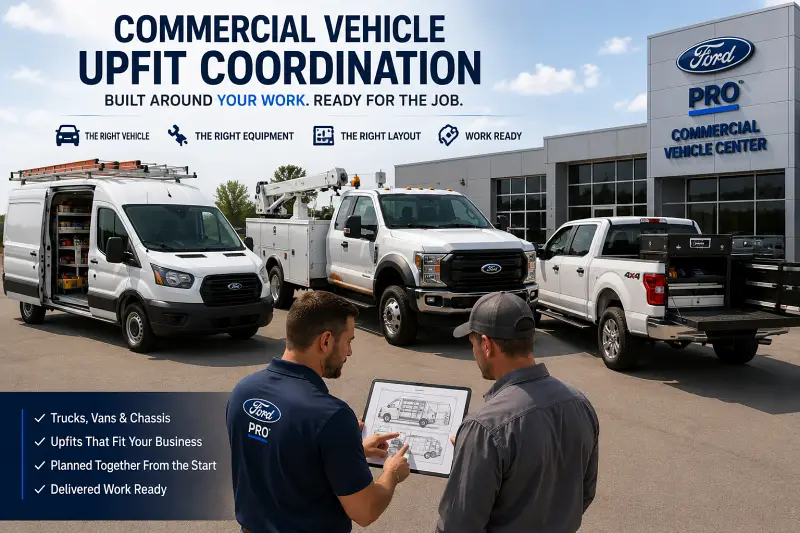
The Upfit Should Be Part of the Vehicle Plan
For many commercial vehicles, the factory vehicle is only the starting point. The truck or van still needs to be configured around the tools, equipment and materials the employee uses every day.
Waiting until after the vehicle arrives to think about shelving, racks, service bodies or storage can create unnecessary changes and may result in a vehicle that is not ideally configured for the equipment being installed.
Planning the vehicle and upfit together can help identify the right Ford model, body configuration, payload capacity and equipment before the factory order is finalized.
Start with the employee’s job, not the equipment catalog. The best upfit is the one that helps the employee safely organize, carry and access the tools and materials needed throughout the workday.
Upfit Planning Can Include:
- Tools and equipment carried
- Parts and material storage
- Payload requirements
- Vehicle dimensions
- Employee workflow
- Ladder and long-material storage
- Security requirements
- Trailer and towing needs
- Interior protection
- Specialized commercial equipment
Why Commercial Vehicle Upfit Planning Matters
The equipment added to a work vehicle affects more than appearance. It can change storage, payload, accessibility and how efficiently an employee works throughout the day.
Organize Tools & Equipment
Give employees dedicated places for commonly used tools, parts and equipment instead of allowing cargo to move around the vehicle.
Protect Payload Capacity
Shelving, racks, bodies, toolboxes and other equipment add weight. The complete vehicle should be considered when reviewing expected payload.
Improve Daily Workflow
Arrange equipment around how the employee actually works so frequently used items can be reached efficiently.
Protect Tools & Materials
Storage systems, partitions, enclosed bodies and locking compartments can help secure equipment while the vehicle is being used or parked.
Reduce Changes Later
Planning before ordering can reduce the need to change the vehicle or equipment after the upfit process has already started.
Deliver a Work-Ready Vehicle
Coordinating the vehicle and equipment can help move the completed vehicle into service with the equipment the employee needs to start working.
Commercial Vehicle Upfit Options
Upfits can range from simple storage systems to specialized truck bodies built around a particular trade or application.
Shelving & Storage
Organize tools, parts, bins and equipment inside cargo vans with shelving, drawers, cabinets and storage systems.
- Adjustable shelving
- Parts bins
- Drawers and cabinets
- Tool organization
Bulkheads & Partitions
Separate the driver compartment from the cargo area and configure access based on how the van will be used.
- Solid partitions
- Perforated partitions
- Partitions with doors
- Driver-area separation
Ladder Racks
Carry ladders, conduit and other long materials while preserving interior cargo space.
- Fixed ladder racks
- Drop-down systems
- Single-side systems
- Dual-side systems
Toolboxes & Bed Storage
Add secure storage to pickup beds for tools, parts and equipment employees need throughout the day.
- Cross-bed toolboxes
- Side storage
- Drawer systems
- Lockable compartments
Floor, Wall & Ceiling Liners
Protect cargo-van interiors from equipment, materials and regular commercial use.
- Floor protection
- Wall liners
- Ceiling liners
- Cargo-area protection
Trade Packages
Build a storage and equipment layout around the needs of a particular trade.
- HVAC
- Plumbing
- Electrical
- General contracting
Configure a Ford Transit Around the Employee’s Job
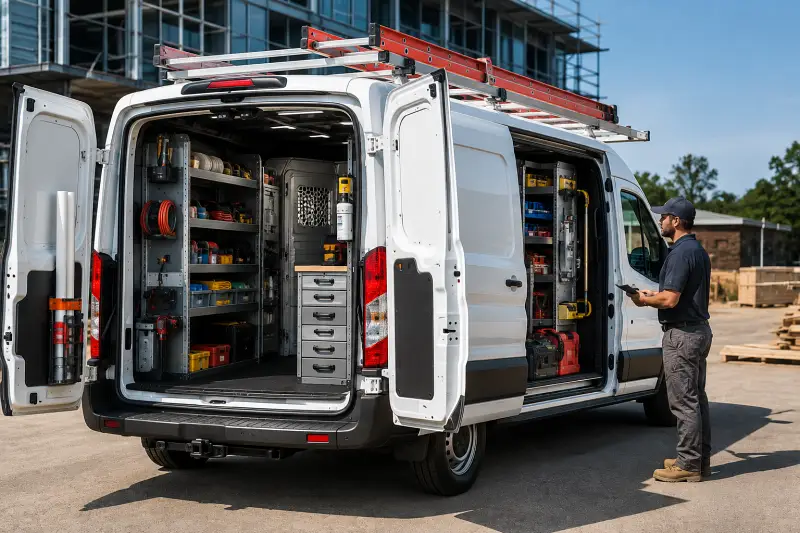
Ford Transit provides businesses with multiple roof heights and body configurations that can be combined with shelving, racks, partitions and other equipment.
The correct setup depends on what employees carry, whether they need to stand or work inside the van, how often equipment is accessed and how much payload the completed vehicle must handle.
To compare actual equipment layouts before choosing a van, browse Ford Transit shelving and upfit packages at SWFL Upfit. Select the roof height and configuration, then review the package details with your vehicle order.
- Shelving and storage
- Bulkheads and partitions
- Ladder racks
- Trade packages
- Floor and wall protection
- Specialized cargo systems
Commercial Truck Body & Equipment Options
Chassis-cab and pickup applications can support a wide range of specialized commercial bodies depending on vehicle capacity and job requirements.
For body-specific images and configuration information, explore commercial truck bodies at SWFL Upfit. The truck-body fitment guide explains the dimensions and weight ratings to review before selecting a chassis.
Service Bodies
Exterior storage compartments give technicians organized access to tools, parts and equipment from outside the truck.
Enclosed Service Bodies
Enclosed service-body designs combine exterior storage compartments with protected interior cargo space.
Flatbeds
Open flat platforms can support materials, equipment and loads that do not fit easily within a traditional pickup bed.
Dump Bodies
Hydraulic dump bodies can support landscaping, construction and material-handling applications.
Contractor Bodies
Combine open cargo areas with side storage and racks for construction materials, tools and long items.
Specialized Bodies
Depending on the application, options may include crane, mechanic, landscape, refrigerated, rollback, hooklift, glass and other specialized commercial bodies.
Match the Upfit to the Right Ford Vehicle
The equipment and workload can help determine which Ford vehicle should be used as the foundation for the finished commercial vehicle.
Ford Maverick
Useful for lighter equipment, bed-storage systems and service applications where compact size is valuable.
Ford Ranger
Consider Ranger when additional pickup capability, payload and towing are needed without moving to a full-size truck.
Ford F-150
Full-size capability can support toolboxes, racks, bed-storage systems and a wide range of commercial applications.
Ford Super Duty
Super Duty pickup and chassis-cab models can support heavier equipment and specialized commercial bodies.
Ford Transit
Transit provides an enclosed platform for shelving, storage, trade packages and specialized van equipment.
Different Jobs, Different Upfits
A fleet may need several vehicle and upfit combinations based on employee roles instead of one standardized configuration for every vehicle.
Remember That the Upfit Uses Payload Too
Payload is not limited to the tools or materials an employee puts into the vehicle after delivery.
Shelving, partitions, racks, toolboxes, service bodies and other permanent equipment all add weight to the completed vehicle.
Passenger weight, equipment, materials and trailer tongue weight may also need to be considered when evaluating the final vehicle configuration.
Configure around the completed work vehicle. The vehicle should be reviewed based on the expected finished configuration rather than the empty factory vehicle alone.
Payload Can Include:
- Driver and passengers
- Permanent shelving
- Partitions and racks
- Toolboxes
- Service or utility bodies
- Tools and equipment
- Parts and materials
- Trailer tongue weight
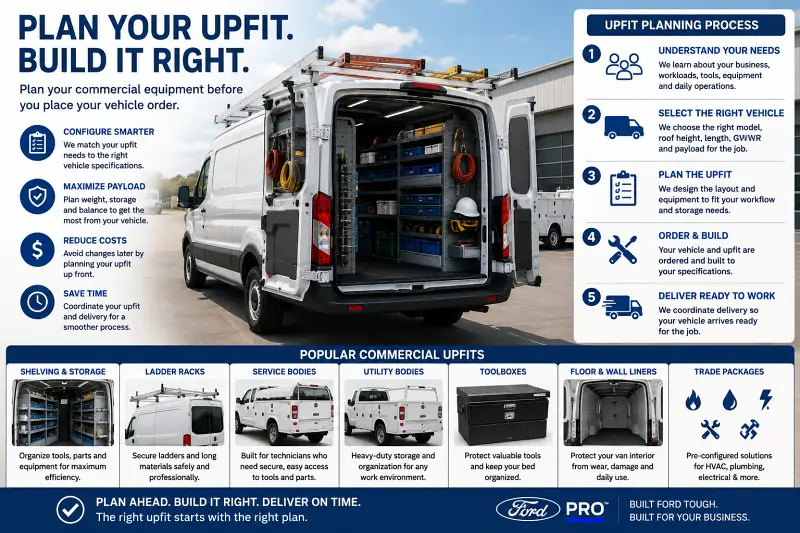
The Commercial Vehicle Upfit Planning Process
Start with the work, choose the vehicle and then coordinate the equipment around the employee’s needs.
Define the Job
Review what the employee carries, how the equipment is used and what needs to be accessed throughout the day.
Select the Vehicle
Choose the Ford model, body configuration, payload and dimensions that fit the intended application.
Plan the Upfit
Determine shelving, racks, storage, body equipment and other components needed for the job.
Coordinate the Build
Coordinate the vehicle order and upfit so the equipment and vehicle specifications work together.
Deliver Ready for Work
Complete the vehicle and equipment process so the finished work vehicle can be placed into service.
Coordinate the Upfit With the Factory Order
If your business is factory ordering a Ford work vehicle, the intended upfit should be discussed before the vehicle configuration is finalized.
This can be particularly important for commercial vans, chassis-cab trucks and vehicles carrying substantial equipment.
Reviewing the completed work vehicle early can help determine whether the selected Ford model, configuration and equipment are appropriate for the job.
Commercial Vehicle Upfit Questions
What is a commercial vehicle upfit?
A commercial vehicle upfit is equipment or a body added to a truck or van to prepare it for a specific business application. Examples include shelving, ladder racks, toolboxes, service bodies and specialized commercial equipment.
Should the upfit be planned before ordering the vehicle?
When possible, yes. Planning the upfit before the vehicle configuration is finalized allows payload, dimensions, equipment and vehicle requirements to be considered together.
Can Ford Transit vans be ordered with commercial upfits?
Transit vans are commonly used with shelving, partitions, ladder racks, liners and trade-specific equipment. The appropriate configuration depends on the employee’s workload and the equipment being carried.
Does an upfit affect vehicle payload?
Yes. Permanent equipment such as shelving, racks, toolboxes and commercial bodies adds weight to the vehicle and should be considered as part of the completed vehicle’s payload.
Can you coordinate service bodies and work truck bodies?
Commercial truck applications can include service bodies, utility bodies, flatbeds, dump bodies, contractor bodies and other specialized equipment depending on the vehicle and business requirements.
Can the same upfit be used across several fleet vehicles?
Businesses may choose to standardize certain vehicle and equipment configurations for employees performing similar jobs. Other roles may require different vehicles or upfits.
Tell Me What Your Work Vehicle Needs to Do
Tell me about the vehicle, employee, tools, equipment, materials and workload. We can review the Ford vehicle and commercial equipment together before the order is finalized.
Tell Me About Your Upfit Needs
Complete the short form below and I can review your vehicle and equipment requirements with you.
Compare Upfit Coordination in the Full Fleet Program
A finished Ford work vehicle depends on the correct chassis, body, payload and delivery plan. If a leasing company is involved, confirm who approves each specification and change.
See the Ford Pro and Holman upfit comparison and review the full Ford Pro versus leasing companies guide.