Fleet Expansion & Replacement Planning for Businesses
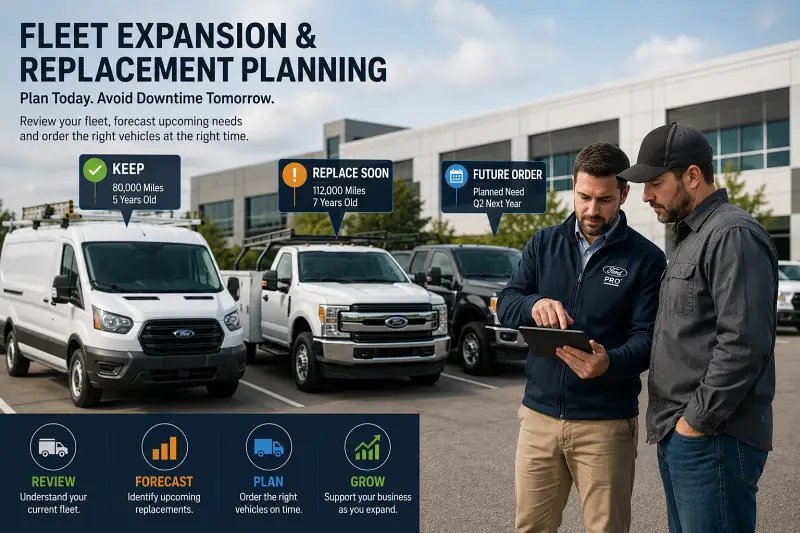
Plan vehicle replacements before aging trucks and vans create urgent problems. We can review your current fleet, mileage, vehicle age, future growth and expected replacement needs to build a practical ordering strategy.
Whether your business is replacing older vehicles, adding employees or expanding into new locations, planning ahead can help keep the right vehicles available when they are needed.
Why Fleet Replacement Planning Matters
Many businesses replace vehicles only after maintenance costs rise, reliability becomes a concern or a vehicle can no longer support the employee’s workload.
By that point, the business may have limited options and may need to purchase whatever vehicle happens to be available.
A replacement plan gives the business time to review the job, select the right vehicle, consider factory ordering and prepare for future fleet needs before the situation becomes urgent.
The goal is not to replace vehicles too early. The goal is to understand which vehicles may need attention next so the business has time to make a planned decision.
Replacement Planning Can Consider:
- Vehicle age
- Current mileage
- Annual mileage
- Maintenance history
- Downtime concerns
- Current workload
- Changes in employee roles
- Future hiring
- New locations or contracts
- Factory order timing
Identify Which Vehicles Need Attention Next
Replacement planning starts with understanding the vehicles already operating in your fleet.
Vehicle Age
Review how long each vehicle has been in service and whether its age still fits the company’s ownership strategy.
Mileage
Compare current mileage and annual mileage to estimate how quickly each vehicle is moving toward its next replacement decision.
Maintenance & Repairs
Consider whether maintenance frequency, repair costs or service needs are beginning to affect operating costs.
Downtime
Review whether vehicle downtime is disrupting employees, customer appointments, jobsites or business operations.
Capability
Determine whether the existing vehicle still has the payload, towing, cargo and equipment capability required for the employee’s job.
Future Need
Consider whether the replacement vehicle should perform the same job or whether the employee’s role and workload have changed.
Keep, Plan Replacement or Order
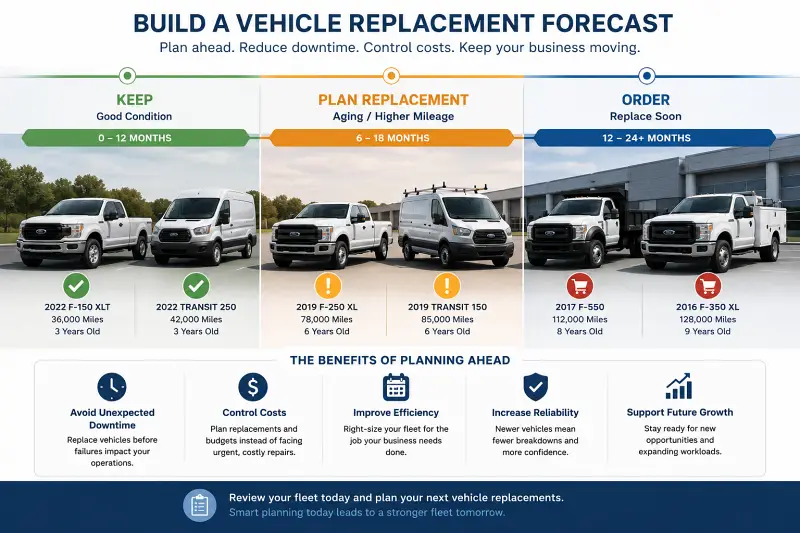
Not every vehicle needs to be replaced at the same time. A simple forecast can help prioritize where attention is needed.
Keep
Vehicles that continue to fit the job, remain reliable and are performing well can stay in service while the business continues monitoring them.
- Fits current workload
- Acceptable operating cost
- Maintenance is manageable
- No immediate replacement need
Plan Replacement
Vehicles approaching a replacement point can be placed into the forecast so specifications, timing and ordering options can be reviewed in advance.
- Higher mileage
- Aging vehicle
- Increasing maintenance needs
- Expected replacement in coming months
Order
When a replacement need is known and the timeline allows, the business can begin reviewing configurations and factory-order timing.
- Replacement requirement confirmed
- Vehicle configuration reviewed
- Ordering timeline established
- Delivery plan considered
Build a Vehicle Replacement Forecast
A replacement forecast can help the business see which vehicles may need attention over the coming months and plan orders around those expected needs.
Ready to Build Your Fleet Replacement Forecast?
Use our free Fleet Replacement Planner to review your vehicles based on age, mileage, annual use, repair costs, downtime and replacement lead time.
The planner can help identify which vehicles may be worth monitoring, which should enter your replacement forecast and which may deserve a near-term replacement review.
Plan for Growth Before the Vehicles Are Needed
Replacement planning is only one part of fleet forecasting. Growing businesses may need additional vehicles even when the current fleet is performing well.
New employees, service areas, contracts and locations can create future vehicle needs that may be easier to manage when they are identified early.
If the business expects to add vehicles during the coming year, those expected needs can be included in the same fleet plan as scheduled replacements.
Growth Can Create Vehicle Demand Through:
- New technicians
- New sales employees
- Additional service crews
- New contracts
- New territories
- Additional company locations
- New delivery routes
- Expanded management teams
Don’t Automatically Replace a Vehicle With the Same Vehicle
The employee’s job may have changed since the current vehicle was originally purchased.
Review the Job
Determine what the employee does today rather than assuming the old vehicle is still the right fit.
Review Payload
Consider passengers, tools, equipment, materials and permanent upfits when selecting the replacement.
Review Towing
Confirm whether the employee tows regularly and whether the expected trailer requirements have changed.
Review Mileage
Consider annual miles, local driving, highway use and fuel consumption when choosing the next vehicle.
Review Equipment
Determine whether tools, racks, shelving, bodies or storage needs have changed since the current vehicle entered service.
Compare Vehicle Options
A different Ford model or configuration may now fit the employee’s workload better than the vehicle being replaced.
Compare Ford Vehicles Before Finalizing the Replacement
Replacement planning is an opportunity to make sure the next vehicle is still matched to the employee’s actual workload.
Ford Maverick
Consider Maverick for lighter-duty roles where compact size, pickup-bed utility and fuel usage are major priorities.
Ford Ranger
Consider Ranger for employees needing more traditional pickup capability while remaining below full-size truck dimensions.
Ford F-150
F-150 provides a broad range of configurations for businesses requiring full-size pickup capability.
Ford Super Duty
Super Duty can support heavier towing, payload and commercial body applications.
Ford Transit
Transit can support service, delivery, passenger and commercial upfit applications.
Match Each Role to the Right Vehicle
The next replacement cycle can be an opportunity to right-size different employee roles instead of replacing every vehicle with the same type.
Build a 6–12 Month Vehicle Plan
Looking several months ahead can help the business prepare for known replacements and expected growth.
Review the Current Fleet
Identify vehicle age, mileage, condition and current use.
Identify Upcoming Replacements
Determine which vehicles may require replacement during the coming months.
Estimate Growth
Include expected new employees, locations, contracts and other expansion needs.
Review Vehicle Requirements
Determine which Ford vehicles and configurations fit each expected replacement or expansion need.
Plan Order Timing
Review factory ordering and expected timing before the vehicles are needed.
Use Factory Ordering as Part of the Replacement Strategy
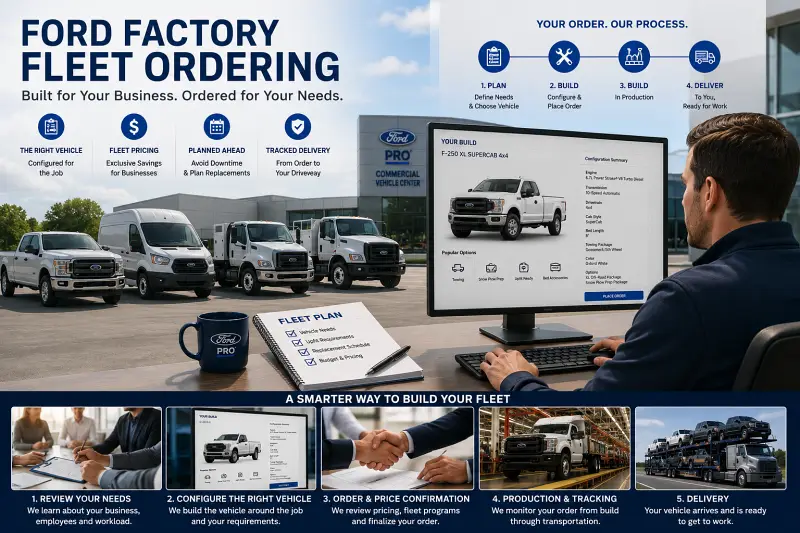
When vehicle needs are known far enough in advance, factory ordering may allow the business to configure the replacement around the employee’s job instead of relying only on available dealer inventory.
The exact timing varies by model, configuration, production schedule and availability, so known future needs should be reviewed early.
Consider More Than Vehicle Age
Replacement decisions should consider how the vehicle affects the business, not simply its model year.
Repair Cost
Increasing repair expenses may change the economics of continuing to operate an older vehicle.
Downtime Cost
A vehicle unavailable for service may affect employees, customer appointments and revenue-producing work.
Fuel Usage
Higher-mileage vehicles may make fuel consumption an important factor in the replacement decision.
Capability
The current vehicle may no longer match the employee’s payload, towing or equipment requirements.
Future Use
A replacement should be configured around how the business expects to use the vehicle going forward.
Timing
Ordering before the vehicle is urgently needed can give the business more time to review the right configuration.
Fleet Expansion & Replacement Planning Questions
When should a business replace a fleet vehicle?
There is no single replacement point that applies to every vehicle. Businesses may consider age, mileage, maintenance costs, downtime, reliability, workload and future vehicle needs when deciding when replacement makes sense.
How far ahead should we plan fleet replacements?
Reviewing needs several months in advance can give the business more time to evaluate vehicle requirements and factory-ordering options. Actual timing depends on the vehicle, production schedule and business needs.
Should we replace an old vehicle with the same model?
Not necessarily. Replacement is a good opportunity to review the employee’s current job, mileage, payload, towing and equipment needs to determine whether the same model or a different Ford vehicle makes more sense.
Can fleet planning include vehicles for new employees?
Yes. Expected new employees, locations, contracts and other business growth can be included in the same forecast as replacement vehicles.
Can replacement vehicles be factory ordered?
When ordering is available and the timeline allows, factory ordering can be considered for planned replacement vehicles. Timing varies by model, configuration and production conditions.
Can you help build a fleet replacement schedule?
We can review the vehicles your business operates, expected replacement needs and future growth to help develop a practical vehicle planning strategy.
Let’s Review Your Next Vehicle Needs
Tell me about your current fleet, vehicle age, mileage, expected replacements and future growth. We can review what may need attention now and what your business may need over the coming months.
Tell Me About Your Fleet
Complete the short form below and I can review your current fleet, expected replacements and future vehicle needs.
Who Will Manage the Vehicles After Delivery?
Replacement timing is part of a larger Ford fleet plan. Compare Ford Pro ordering, connected tools and service resources with the work a separate fleet management company would perform before you add another provider.
Compare Ford Pro with fleet leasing companies or use the fleet management decision guide.